Why the Hurricane Category on the Forecast Matters More Than You Think
A Category 1 storm and a Category 4 storm aren't the same disaster with different intensity. They're different kinds of damage entirely. The Saffir-Simpson scale measures wind speed, and wind speed determines which parts of a house fail first, which is why the category on the forecast matters more than most homeowners realize when they're deciding whether to prep or evacuate.
What Each Hurricane Category Breaks
Wind speed determines which parts of a house fail first — here is how damage escalates as the category climbs.
Category 1 & 2: Roof & Tree Damage
Category 1 storms bring sustained winds of 74 to 95 mph. At this range, damage tends to be limited to weak points: loose shingles, damaged gutters, snapped tree limbs, and downed power lines. Homes with reasonably maintained roofs usually come through with cosmetic damage rather than structural failure. Category 2 storms, 96 to 110 mph, start peeling roof material more broadly and can snap smaller trees outright. Mobile homes and older roofing systems face real risk here, not just minor loss.
Category 3: Wind Breaks Roof Decking
Category 3 storms cross the threshold into "major hurricane" for a reason. At 111 to 129 mph, well-built homes can sustain significant structural damage: roof decking failure, not just shingle loss. This is where wind starts working on the building itself rather than just the surface layer.
Category 4 & 5: Structural Failure & Total Roof Loss
Category 4, 130 to 156 mph, brings severe structural damage even to well-built homes. Roof and wall failure becomes common, and trees and power poles come down across entire neighborhoods, sometimes cutting off access for days. Category 5, 157 mph and up, is capable of tearing roofs off completely and collapsing exterior walls. Total roof failure and wall collapse are not rare outcomes at this level. Areas that take a direct Category 5 hit are often uninhabitable for extended periods.
Why Hurricane Wind Damage Doesn't Increase in a Straight Line
Wind damage doesn't scale evenly with category. A jump from 95 mph to 110 mph doesn't cause 15% more damage, it changes which failure mode kicks in. Wind force increases with the square of wind speed, so a storm at 130 mph is pushing roughly four times the force of a storm at 65 mph, not twice.
How a Broken Window Turns Category 2 Wind Into Category 4 Damage
Once wind gets under a roof edge or through a broken window, the pressure differential inside the structure adds to the outward pull on the roof deck, and that's the mechanism behind sudden, catastrophic roof loss during major hurricanes. A single broken window can turn a Category 2 event into Category 4-level internal damage for that specific house.
Storm Surge & Rainfall: The Hurricane Damage the Category Doesn't Measure
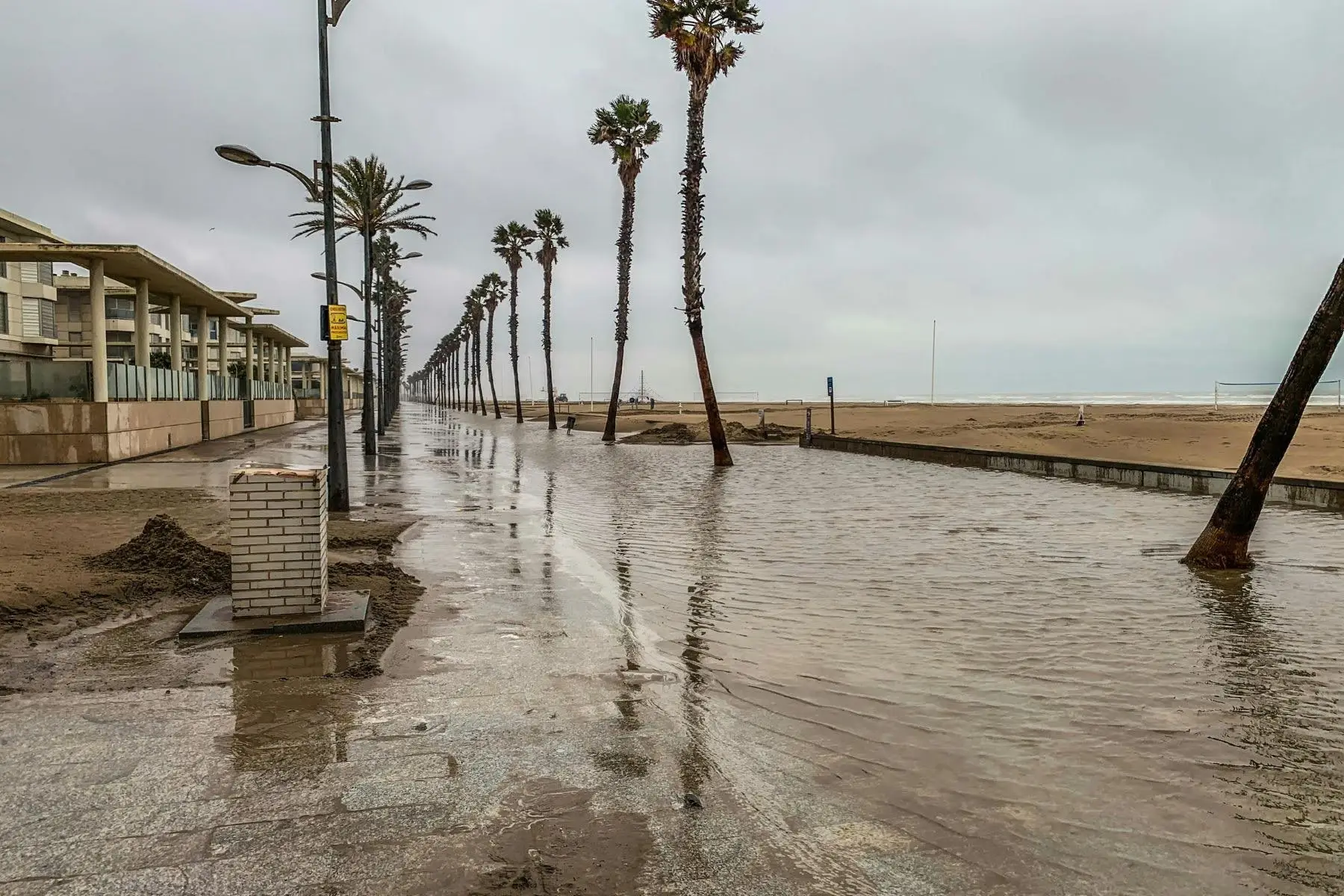
The category number describes wind alone. It says nothing about storm surge, rainfall totals, or how long the storm sits over an area, and those factors often cause more total damage than the wind itself.
A slow-moving Category 1 that stalls over a coastal community can drop more rainfall and cause more flooding than a fast-moving Category 3 that blows through in six hours. Storm surge, driven by a combination of wind field size and storm speed rather than category alone, has been responsible for some of the deadliest and costliest damage in hurricane history, independent of the category number attached to the storm.
This is the gap that catches people off guard:
- A "weak" hurricane by category can still flood a house to the ceiling if it sits and dumps rain
- A "strong" hurricane by category that moves through fast might leave a home with nothing worse than a damaged roof
- Storm surge risk depends more on coastline shape and storm size than on the category number alone
Hurricane Damage Risk by Region: Gulf Coast to the Atlantic Coast
The response should match the actual threat profile of a given area, not just the category forecast.
Florida Gulf Coast: Storm Surge Risk in Fort Myers & Miami
Along Florida's Gulf Coast, storm surge and slow-moving systems that stall offshore create flooding risk that outpaces the wind damage forecast entirely. 911 Restoration of Fort Myers/Naples sees this pattern across Lee, Charlotte, Sarasota, and DeSoto counties, where flat terrain traps floodwater regardless of the storm's official category. Further south, 911 Restoration of Miami handles a similar mix of wind and surge exposure across the Miami-Fort Lauderdale corridor.
Texas Gulf Coast: Galveston Bay Storm Surge
On the Texas Gulf Coast, storms tracking toward Galveston Bay bring both wind exposure and surge risk to low-lying communities. 911 Restoration Southern Houston covers the Webster and Galveston Bay area, where surge flooding often does more damage than the wind category alone would suggest.
Louisiana and Mississippi: Levee & Coastal Flood Exposure
Louisiana's coast faces a similar dynamic. 911 Restoration New Orleans works storms that push in from the Gulf toward Slidell and the surrounding parishes, where levee-adjacent flooding risk exists at every category level. Along the Mississippi coast, 911 Restoration Southern Mississippi covers Gulfport and the surrounding coastline, where storm surge combined with the region's flat elevation profile creates flood exposure that isn't always proportional to the storm's wind category.
South Carolina Lowcountry: Tidal Flooding in Charleston
Charleston and the South Carolina Lowcountry deal with tidal flooding on top of hurricane wind exposure. 911 Restoration Charleston and 911 Restoration Coastal Carolina both work this near-sea-level terrain, where even a moderate storm can trap standing water for days after the wind dies down.
Inland Georgia: Hurricane Damage Long After Landfall
Storms weaken as they move inland, but they don't stop causing damage. Georgia's inland communities still see significant wind and rain impact from storms that made landfall on the coast days earlier. 911 Restoration of Atlanta/Marietta responds to this inland remnant pattern regularly, well after the storm has dropped below hurricane strength on paper.
911 Restoration: 24/7 Hurricane Damage Response Across the Coast
Whatever category shows up on the forecast, the damage on the ground doesn't always match the number. 911 Restoration's IICRC-certified crews across the Gulf and Atlantic coast respond to wind damage, storm surge flooding, and everything in between, with direct insurance billing to keep the claims process moving while your home gets dried out and repaired. If your property has taken hurricane damage, find your local 911 Restoration branch for 24/7 emergency response.