The First Hard Freeze Causes More Burst Pipes Than the Coldest Night
The first hard freeze of the season tends to cause more burst pipes than the coldest night of the winter does. Houses are not winterized yet, garden hoses are still attached, and nobody has looked at the crawl space since spring.
A pipe usually does not split from water expanding against the pipe wall. It splits because ice forms at one point in the line and pressure builds between that blockage and a closed faucet downstream.
Here is what homeowners across the Mountain West, the Upper Midwest and North Texas should know about burst pipe water damage in November, which lines fail first, and how restoration handles the water after one lets go.
Why the First Hard Freeze Causes So Many Burst Pipes
Temperatures drop below freezing overnight in late fall while daytime highs are still mild, which is exactly the pattern that catches people out. The house feels fine during the day, so the vulnerable spots never get attention.
Pipes in unheated areas can reach freezing well before the air outside does, because a crawl space or an attic holds cold long after sunrise.
A pipe can also freeze, thaw and split without anyone noticing until water appears somewhere else in the house. The break is often found a day or two after the cold night that caused it.
Which Pipes Freeze First in a House
Certain lines fail far more often than others when the temperature drops. Knowing where they are tells you where to look first.
Pipes in Exterior Walls and Unheated Spaces
- Supply lines running through exterior walls, unheated crawl spaces, attics, garages and unfinished basements are the usual failures. Insulation in those areas is often thin or missing, and in older homes the plumbing was run before anyone was thinking about freeze protection.
- Kitchen and bathroom lines on an outside wall are a common spot, especially under a sink in a cabinet that stays closed all winter.
Hose Bibs and Irrigation Lines
- An outdoor spigot with a hose still attached is one of the most reliable ways to crack a pipe. The hose holds water against the valve, that water freezes, and the split often happens on the interior side of the wall where nobody can see it.
- Irrigation backflow preventers and above-ground sprinkler components are in the same category. They sit outside, they hold water, and they freeze early.
Vacation Homes and Properties Between Tenants
A property with the heat turned down or off has no margin at all. In mountain and high desert markets this is a regular source of large losses, because the water can run for days before anyone arrives.
Signs a Pipe Has Frozen or Burst
- No water or a thin trickle from one fixture while the rest of the house runs normally
- Frost or condensation on an exposed section of pipe
- A bulge, split or crack in a visible line
- Water stains on a ceiling or wall that appear after a cold night
- A musty or damp smell near an exterior wall or a cabinet
- A running water sound with every fixture turned off
- A water bill that jumps without an obvious reason
- Shut off the main water supply. Everyone in the house should know where that valve is before a freeze, not during one.
- Open faucets to drain the remaining water in the lines and relieve pressure on the rest of the system.
- Turn off power to affected areas at the breaker if water is near outlets, fixtures or the electrical panel. If reaching the panel means standing in water, wait for an electrician.
- Move what you can out of the water. Furniture legs, boxes on the floor and anything stored directly on a basement slab absorb quickly.
- Photograph everything before cleanup starts.
- Call a restoration crew and your insurance carrier. Drying is time sensitive, and the sooner extraction begins the less material has to come out.
How Water Damage Restoration Works After a Burst Pipe
Inspection and moisture mapping
Moisture meters and thermal imaging find where water traveled inside walls, under flooring and through the floor system, which is usually well beyond what is visible.
Water extraction
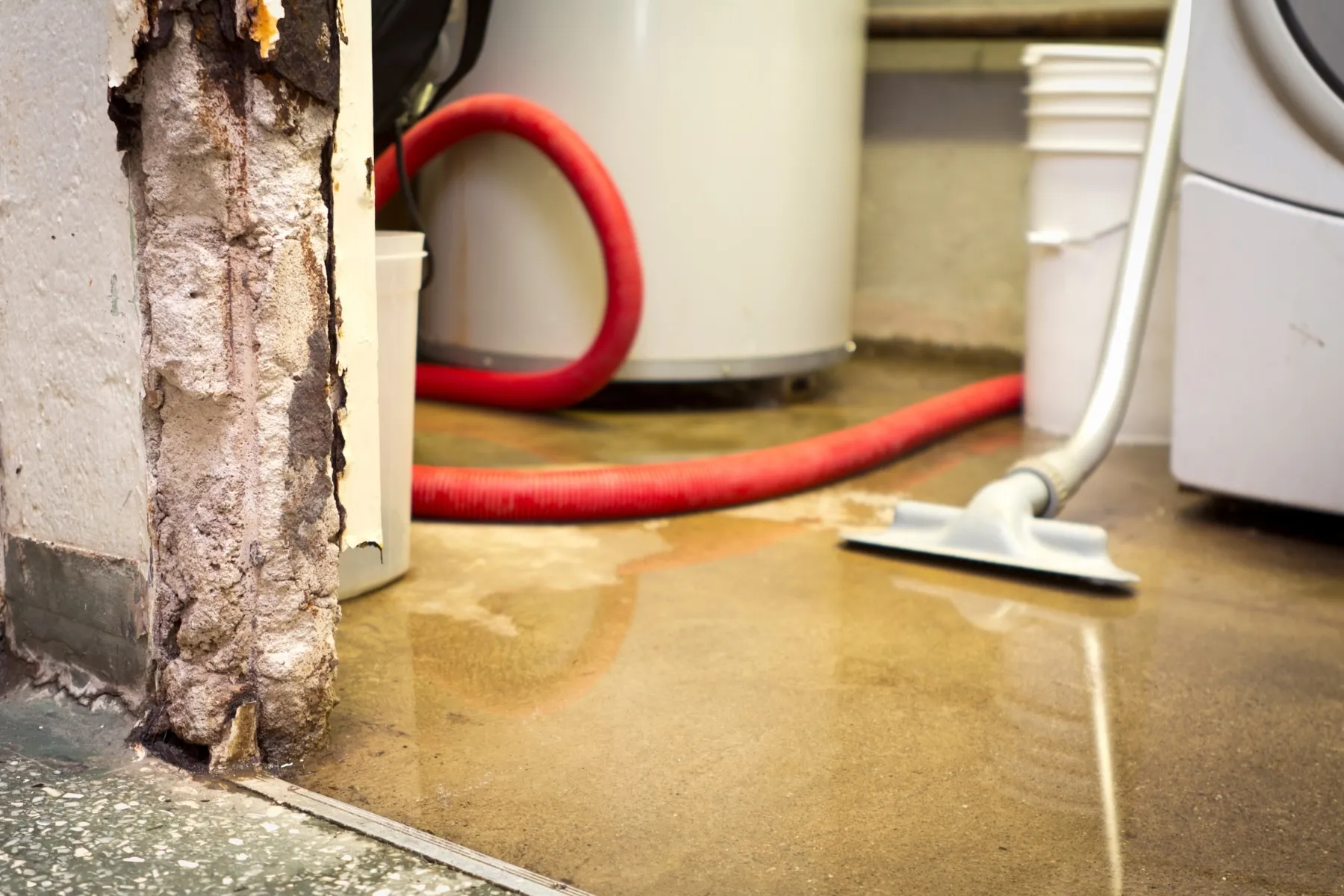
Standing water is pumped and extracted before any drying equipment goes in.
Removal of saturated materials
Wet insulation, swollen baseboard, soaked carpet pad and drywall below the water line come out, cut above the visible line because water wicks upward through the material.
Structural drying
Air movers and dehumidifiers run on the affected areas, with equipment placed inside wall cavities when water got behind finishes.
Daily monitoring
Readings on framing and subfloor determine when equipment comes out, which is when the materials return to the normal dry level for that house.
Repairs
Drywall, insulation, trim and flooring are rebuilt once the structure reads dry.
911 Restoration provides water damage restoration and the reconstruction that follows it, so the same team handles the job from extraction through finished repairs.
What to Document for a Burst Pipe Insurance Claim
- Photos and video of standing water, the water line on each wall, and the failed pipe itself
- The date and time you found the leak and when the water was shut off
- Damaged contents, photographed before they are moved or discarded
- Receipts for emergency plumbing, lodging and anything you bought during the response
- Outside temperatures on the night the pipe failed, which carriers often ask about
Mold Risk After a Burst Pipe in Winter
Cold weather does not prevent mold. A house that is heated and closed up holds interior humidity, and wet material inside a wall cavity can support growth within a few days depending on temperature and how long it stays wet.
Water that ran behind cabinets or under a subfloor is the usual problem, because those areas dry slowly even with equipment in the room.
Where materials stayed wet for an extended period, a mold inspection a couple of weeks after the repair catches growth while removal is still contained.
How to Reduce Burst Pipe Risk Before the Next Freeze
Disconnecting garden hoses and draining outdoor spigots before the first freeze removes the single most common failure point.
Pipe insulation sleeves on exposed lines in crawl spaces, garages and attics cost very little and make a real difference on marginal nights.
Leaving cabinet doors open under sinks on exterior walls lets heated air reach those lines, and a slow drip from the furthest fixture keeps water moving through the system on the coldest nights.
For a property that sits empty, keeping the heat at a minimum setting and shutting off the water at the main are both worth doing.
911 Restoration: 24/7 Burst Pipe and Water Damage Response
911 Restoration handles burst pipe water damage across cold-weather markets, including Denver Metro along the Front Range, Salt Lake City and the Wasatch Front, Boise and the Treasure Valley, Minneapolis and the Twin Cities, and North Texas through the Fort Worth area.
Crews are available 24 hours a day, with a typical arrival goal of 45 minutes. During a regional cold snap, arrival depends on road conditions and how many emergencies are open at once.
Water extraction, structural drying, sanitizing and repairs are handled by one team, so there is a single point of contact from the first call through to a finished home.
Need Burst Pipe Help Now?
Contact 911 Restoration for 24/7 emergency service.