Late Summer in the Mid-Atlantic: When Storms and Humidity Combine
Late summer in the Mid-Atlantic brings a combination most homeowners don't think to plan for: heavy afternoon storms layered on top of weeks of thick, lingering humidity. Either one on its own is manageable. Together, they turn a basement into the most vulnerable room in the house.
A finished basement that looks perfectly dry in July can still be sitting on saturated soil, high groundwater, and air so humid it's doing more damage than any single storm could.
Why Late Summer Is Different From a Single Storm Event
A basement flood from one hard rain is a known problem with a known fix. Late-summer risk is different because it builds in layers. Weeks of high humidity keep moisture in foundation walls and framing elevated even between storms, so by the time a heavier system rolls through, the basement is already starting from a wetter baseline than it was in spring.
That combination, saturated materials plus a sudden inflow of water, is what pushes a basement from damp to genuinely flooded.
How Humidity Alone Creates a Problem
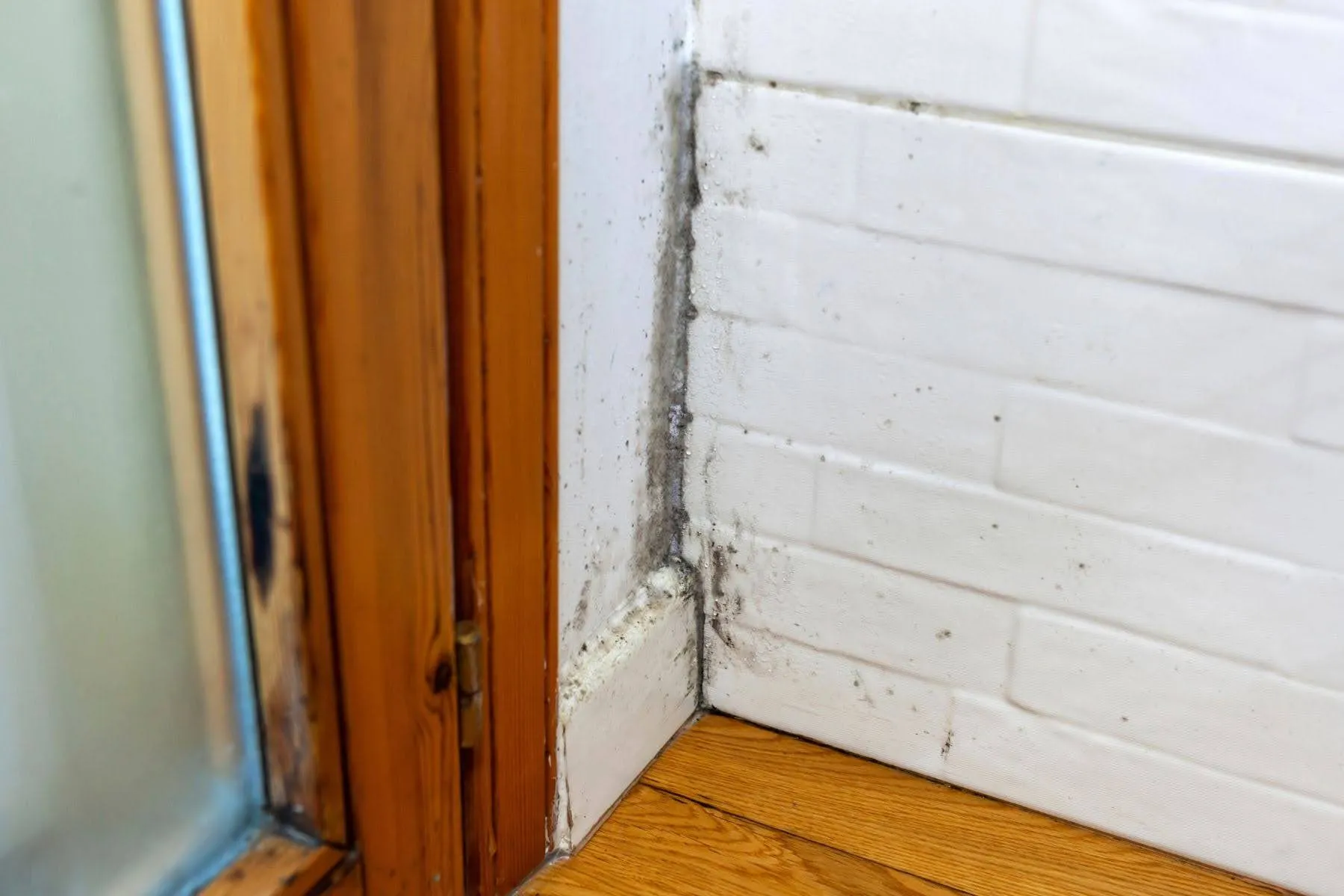
Standing water isn't the only threat. Basements are naturally cooler than the rest of the house, which means humid outside air condenses on foundation walls, pipes, and stored belongings the moment it reaches that lower level. Add a sump pump or dehumidifier that isn't keeping pace, and mold can take hold in 24 to 48 hours, long before anyone notices actual flooding.
Signs a Basement Is Already Under Stress
- A musty smell that doesn't go away with ventilation
- Condensation on pipes, windows, or the foundation wall
- Efflorescence, a white chalky residue on concrete or block walls
- A sump pump running more frequently than usual, even without recent rain
- Soft or warped baseboards near the floor line
What Changes When Storm Runoff Gets Involved
Once heavy rain enters the picture, the restoration approach shifts. Crews need to assess how much water actually reached the space, whether it came through the foundation, a window well, or backed up through a floor drain, and how long materials have been wet. A basement that's been humid for weeks and then takes on standing water needs faster extraction and drying than a basement flooded by a single clean-water event, because the materials were already compromised going in.
Our water damage restoration teams treat late-summer basement calls differently for exactly this reason, checking moisture levels in surrounding materials, not just the visible water line.
Basement Flooding & Humidity Across the Mid-Atlantic
Late-summer basement risk looks a little different depending on where a home sits across the Mid-Atlantic, but the underlying pattern, heat, humidity, and afternoon storms, is consistent across the region.
Virginia & Washington, DC
Homes throughout Virginia and DC deal with both dense summer humidity and the kind of fast-moving afternoon thunderstorms that can dump an inch of rain in under an hour. Our teams in Hampton Roads/Virginia Beach, Northern Virginia, the Virginia Peninsula, and Washington, DC see this pattern show up as much in condensation-driven basement mold as in outright flooding.
Service Areas
- Hampton Roads/Virginia Beach
- Northern Virginia
- Virginia Peninsula
- Washington, DC
Maryland
Maryland's older housing stock, much of it with below-grade living space, tends to hold onto humidity longer than newer construction. Our teams regularly respond to basements where humidity, not a single storm, is the root cause.
Service Areas
- Baltimore
- Central Maryland
- Southern Maryland
- Anne Arundel County
- Prince Georges County/Howard County
Delaware
Delaware sees the same late-summer humidity and storm pattern as its neighbors, even without a dedicated 911 Restoration branch office in that immediate area yet. Homeowners there can still reach our regional teams for a 24/7 assessment when a basement starts showing signs of trouble.
North Carolina
Across North Carolina, from the Piedmont to the coast, high dew points combined with tropical moisture moving up from the Gulf keep basements and crawl spaces under near-constant humidity pressure through late summer. Our teams see basement calls spike right alongside the region's most humid stretches of the year.
Service Areas
- Charlotte
- Raleigh
- Coastal Carolina
- Fayetteville
- Iredell County
- Piedmont Triad
Don't Wait for Standing Water to Call
A basement doesn't need visible flooding to be at risk. If it's been smelling musty, feeling damp, or running a sump pump more than usual this summer, that's already a sign moisture has the upper hand. Contact 911 Restoration for a 24/7 assessment from a local, IICRC-certified crew that knows how late-summer humidity and storms combine to threaten Mid-Atlantic basements.