Atmospheric River Storm Damage on the West Coast
An atmospheric river is a narrow band of water vapor moving off the Pacific, and a strong one can carry an enormous volume of moisture inland. Late fall is when they start arriving in series.
The damage pattern is different from a single hard rainstorm. These systems park over a region and keep delivering rain for a day or more, and the ground stops absorbing it long before the rain stops falling.
Here is what homeowners across Washington, Oregon and Northern California should know about atmospheric river damage, where water gets into a house, and how restoration handles it.
Why Atmospheric River Rain Damages Homes Differently
Duration Finds Every Weakness
A roof, a gutter system and a foundation can all handle an hour of heavy rain. Sustained rain over many hours finds every weakness in sequence.
Soil Saturates First
Once soil saturates, water runs across the surface toward the lowest point, which is often a foundation wall, a window well or a daylight basement.
Storms Arrive in a Run
These systems arrive one after another with nothing drying out between them. The second and third storms land on ground that is already full.
Wind-Driven Rain
Gusts drive rain sideways into siding, window frames and roof flashing that would shed straight-down rain without trouble.
Where Water Gets Into West Coast Homes
- Roof flashing, valleys and skylights, especially where wind drives rain under the shingle edge
- Gutters and downspouts that overflow once they fill with fir needles and leaves
- Foundation walls and cold joints, which leak only under sustained pressure
- Crawl spaces, where saturated soil keeps releasing moisture into the floor system for weeks
- Window wells and grade-level doors on the uphill side of a sloped lot
- Daylight basements, where the back wall is below grade and the front is not
- Floor drains and sewer connections, which can back up when the municipal system is overwhelmed
Landslides, Debris Flow and Hillside Properties
HILLSIDE RISK
Saturated ground on a slope is the risk that matters most in hillside neighborhoods across the region. Soil loses cohesion as water fills the spaces between particles.
Properties below a recent burn scar face a sharper version of it. Vegetation that would normally hold the hillside is gone, and runoff carries soil and debris downhill quickly.
Mature trees also come down in saturated ground more readily than most people expect, and a Douglas fir through a roof turns a wind event into a water loss.
What to Check After the Storm Passes
Work through the house from top to bottom after the weather clears.
Start With the Roof and Attic
- From inside the attic, look for daylight, wet sheathing and damp or compressed insulation. Water entering through the roof travels along framing and appears in rooms nowhere near the opening.
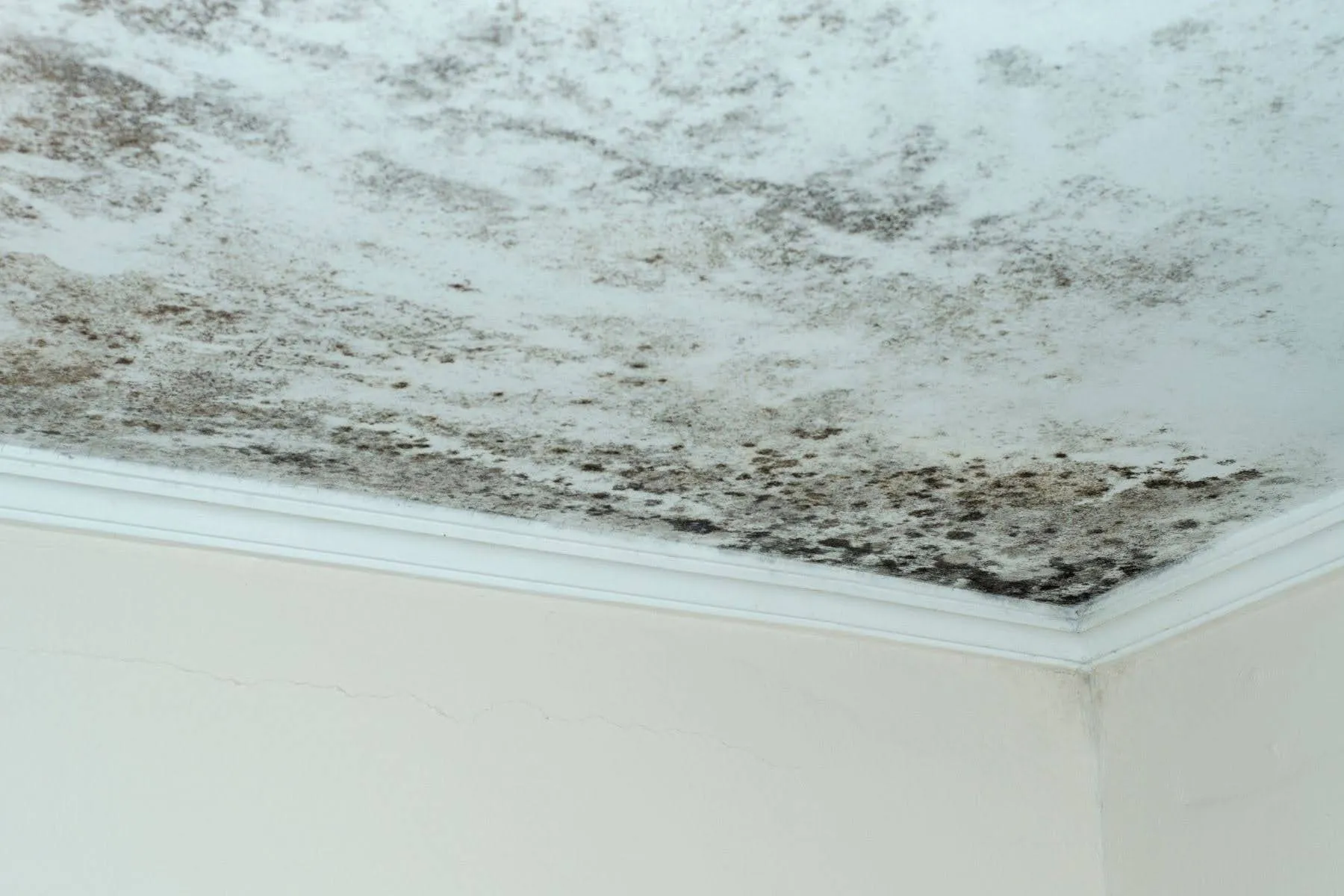
- Inside the house, watch for ceiling stains that are still spreading, bubbling paint on an upper wall, and drywall that has started to sag.
Then the Lowest Level
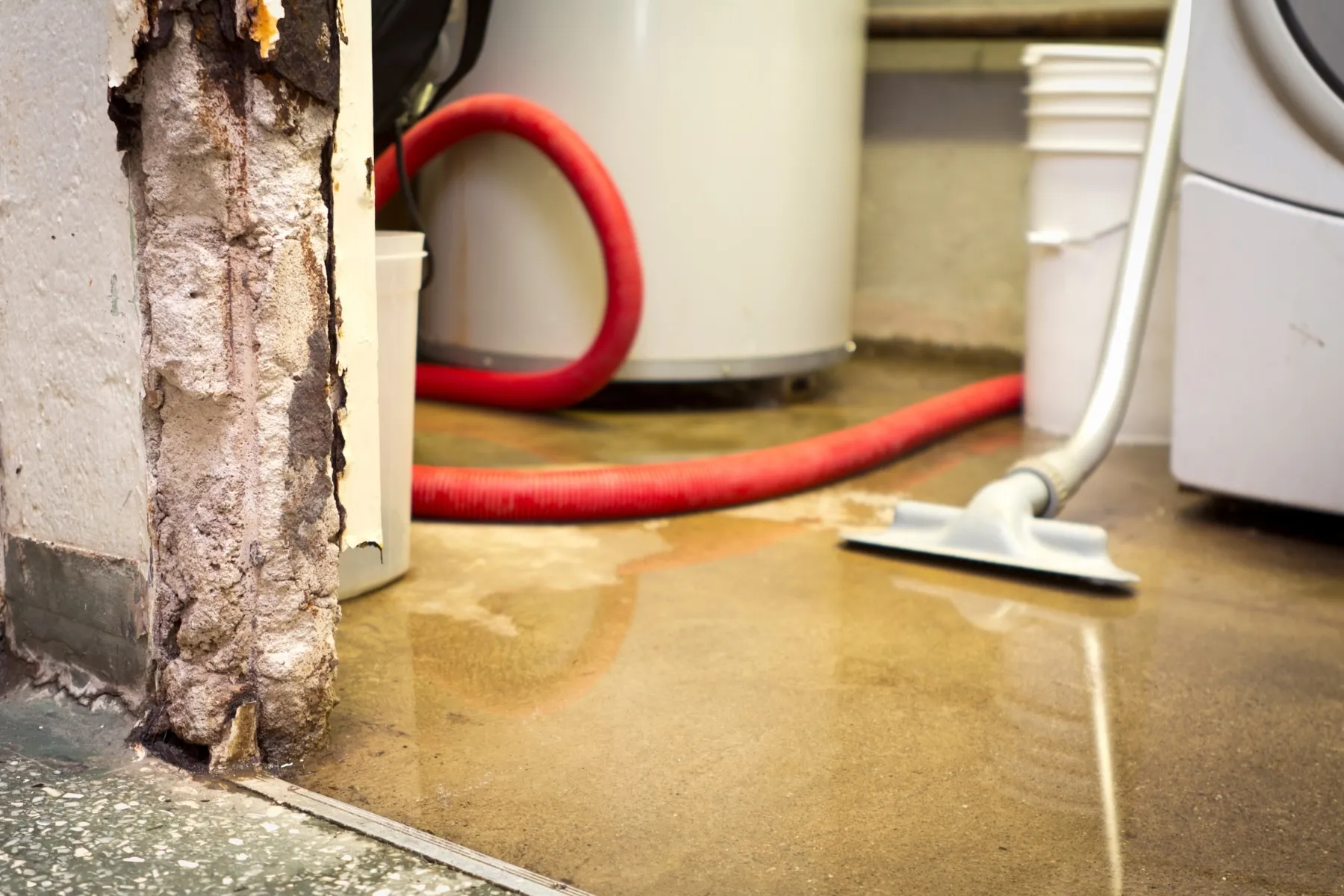
- Check the base of basement walls for a damp line, the floor for standing water, and the sump pump for whether it survived the outage. A basement that has never flooded often floods the year the pump loses power.
- In a crawl space, look for standing water, insulation hanging down and soil that reads wet to the touch.
Check the Exterior
- Walk the perimeter for new erosion channels, soil pulled away from the foundation, and gutters still holding water after the rain has stopped.
- On a slope, look for fresh cracks in the ground, tilted fence posts or retaining walls, and any sign the hillside has moved.
How Storm Damage Restoration Works
Emergency Tarping and Board-Up
The roof opening is covered first so the house stops taking water while the rest of the work proceeds.
Water Extraction
Standing water is pumped and extracted, with the level in a basement brought down gradually when the ground outside is still saturated.
Removal of Wet Materials
Saturated drywall, insulation and flooring come out, cut above the visible water line because water wicks upward through the material.
Structural Drying
Air movers and dehumidifiers run on the affected areas, with dedicated equipment placed in a crawl space rather than relying on units in the rooms above.
Daily Monitoring
Moisture readings on framing and subfloor determine when the equipment comes out.
Reconstruction
Drywall, flooring and finishes are rebuilt once the structure reads dry.
Services That Handle Storm Losses
911 Restoration provides storm damage restoration, water damage restoration and the reconstruction that follows.
Where a floor drain or sewer connection backed up during the storm, the work also follows sewage cleanup procedures, since that water is handled as contaminated.
What to Document for a Storm Damage Claim
- Photos of the water line in each room and of the exterior and roof line
- Any tree or limb that came down, before it is cleared
- Damaged contents, photographed before they are moved
- Receipts for tarps, fuel, a generator and lodging
- Dates of each storm in the series, since several systems may have contributed
Reducing Storm Damage Before the Next System
Clear and Extend Gutters
Clearing gutters of fir needles and leaves before the wet season starts, and extending downspouts away from the foundation, keeps roof water from pooling against the house.
Battery Backup on the Sump Pump
A battery backup on the sump pump keeps it running through an outage, which is when basements usually flood.
Trim Overhanging Limbs
Trimming limbs that overhang the roof lowers the chance of one coming through during wind on saturated ground.
Check Your Grading
Checking that grading still slopes away from the foundation is worth doing once a year, since soil settles over time.
911 Restoration: 24/7 Storm and Water Damage Response on the West Coast
911 Restoration covers storm damage across the Pacific Northwest and Northern California, including Seattle and the Puget Sound area, the Willamette Valley, Southern Oregon, Sacramento and the Central Valley, and the East Bay.
Crews are available 24 hours a day, with a typical arrival goal of 45 minutes. After a widespread storm, arrival depends on road conditions and how many emergencies are open at once.
Board-up, water removal, structural drying, sanitizing and reconstruction are handled by the same team, so there is one point of contact from the first call through to a finished home.
Contact 911 Restoration for 24/7 Emergency Service
Crews are available 24 hours a day, with a typical arrival goal of 45 minutes.