Commercial Water Damage: Why Speed Is Everything
A burst pipe at home is stressful. A burst pipe in your commercial building is a crisis. Every hour of downtime costs money, disrupts employees, and risks permanent damage to your property and inventory. The difference between a manageable repair and a catastrophic loss often comes down to how fast you respond.
Here is what you need to know about commercial water damage and why speed is everything.
Why Commercial Water Damage Escalates So Quickly
Large Square Footage Means Faster Spread
Water does not stop at the edge of a room. In a commercial space, it travels across open floor plans, soaks into concrete slabs, wicks up drywall, and seeps into ceiling systems above and below the point of origin. What starts as a contained leak can affect multiple floors within hours.
HVAC Systems Distribute Moisture Throughout the Building
Commercial HVAC systems move air constantly. When water damage occurs near ductwork, moisture gets pulled into the system and carried to dry areas of the building, accelerating mold risk and expanding the scope of damage fast.
Hidden Water in Drop Ceilings & Raised Flooring
Commercial buildings often have drop ceilings, raised flooring, and thick insulation that absorbs and conceals water. By the time visible damage appears, moisture has often been present long enough for mold to begin forming.
The Real Cost of Delayed Commercial Water Damage Response
Business Interruption Adds Up Every Day
Beyond the cost of repairs, water damage forces businesses to close or operate at reduced capacity. Lost revenue, missed client commitments, and reputational impact compound quickly when restoration is delayed.
Mold Growth Begins Within 24 to 48 Hours
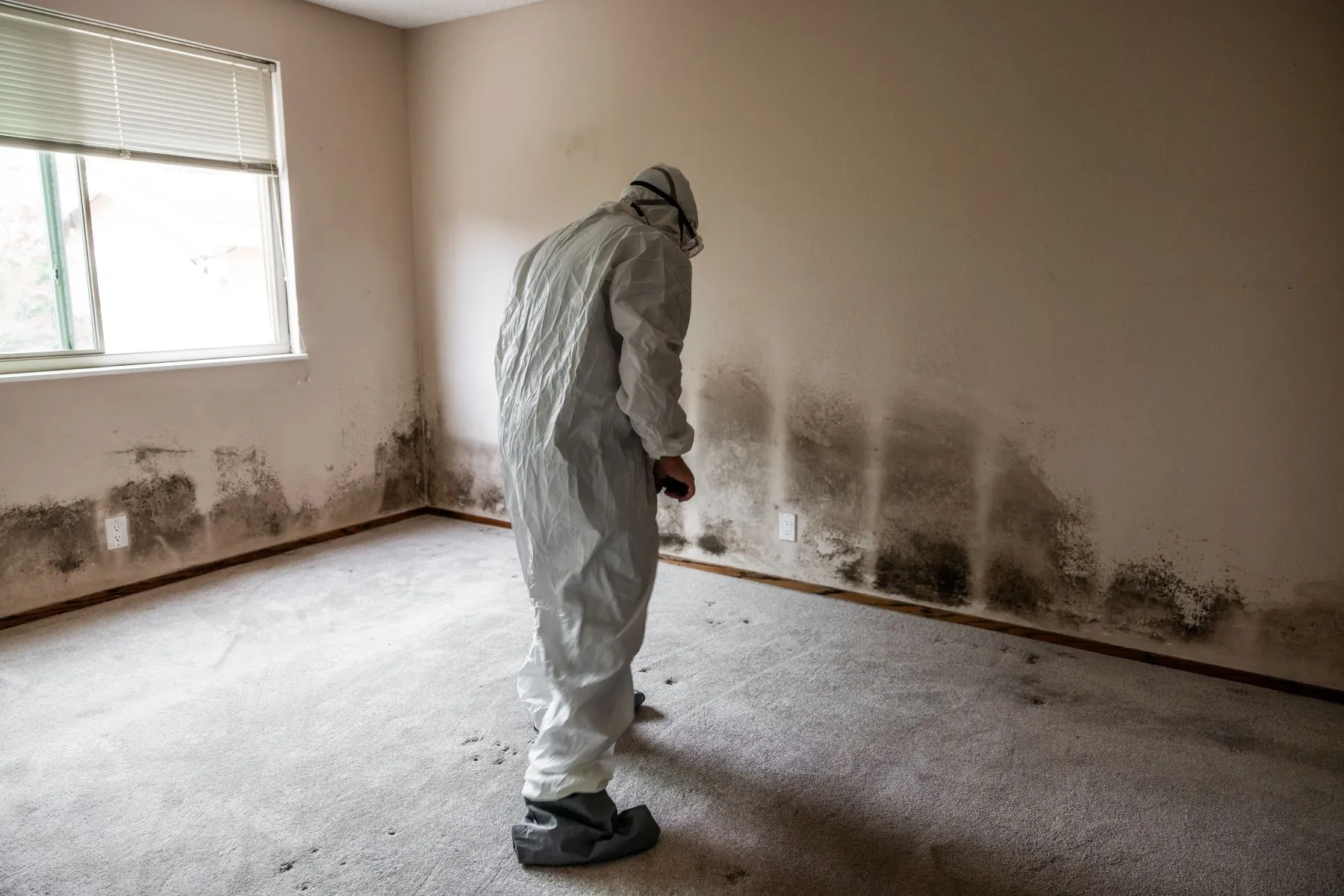
In a water-damaged commercial space, mold can begin forming within one to two days, particularly in areas with poor airflow or hidden moisture. Once it spreads through a large building, remediation becomes significantly more complex and expensive.
Structural Repairs Escalate the Longer You Wait
Wood framing, drywall, and flooring weaken progressively under sustained moisture. A repair job that could have taken days can turn into a weeks-long reconstruction project if extraction is delayed.
Common Causes of Water Damage in Commercial Buildings
- Burst or leaking pipes inside walls and ceilings, often from aging infrastructure or pressure fluctuations
- Roof leaks from storm damage, deteriorating membranes, or clogged drainage on flat commercial roofs
- Sprinkler system malfunctions that can release thousands of gallons across an entire floor in minutes
- External flooding from heavy rain, overwhelmed storm drains, or rising groundwater entering ground-level spaces
What to Do Immediately After Commercial Water Damage
Shut Off the Source & Protect Critical Assets
Close the main water shutoff if it is safe to do so. If the source is a roof leak or external flood, focus immediately on moving equipment, inventory, and important documents out of the affected area.
Document Before You Touch Anything
Photograph and video all visible damage before extraction or cleanup begins. Thorough documentation speeds up the insurance claims process significantly.
Get a Commercial Restoration Team On-Site Fast
Commercial water damage requires industrial extraction equipment, professional drying systems, and technicians experienced with large-building losses. Time spent waiting for the wrong crew is time the damage is getting worse.
Why 911 Restoration Is the Right Partner for Commercial Water Damage
With coverage across 9,000 zip codes and teams available 24/7, 911 Restoration has the reach and resources to respond to large commercial losses fast, including multi-site and regional emergencies.
From the first call to the final walkthrough, 911 Restoration manages every phase of commercial recovery. No handoffs, no gaps, no delays waiting on outside contractors.
What Sets Us Apart
- Scale & speed built for commercial losses, with 24/7 response across 9,000 zip codes
- IICRC-certified technicians trained for multi-floor water extraction and industrial-grade structural drying
- Xactimate-certified estimates and direct coordination with insurance carriers to speed your claim
- One team from emergency response to full reconstruction
Get Your Business Back on Track with 911 Restoration
Commercial water damage will not resolve itself, and the longer it sits, the more it costs. Has your commercial property been affected by water damage? 911 Restoration's certified commercial specialists are ready to respond fast, restore fully, and help you get your fresh start. Contact us today — available 24/7.