From the Prince William County communities of Woodbridge, Dumfries, Triangle, and Occoquan at the northern end of the territory through Fredericksburg, Stafford, and King George along the Rappahannock River corridor, south through the Caroline County communities of Bowling Green, Milford, Rappahannock Academy, and Port Royal, and into the Richmond metro area -- including Richmond itself, Henrico, Glen Allen, Ashland, Hanover, Midlothian, and the Goochland County communities of Manakin Sabot and Crozier -- our IICRC-certified technicians serve the full I-95 corridor stretch of Central Virginia. Whether you're dealing with Rappahannock River flooding in Fredericksburg, James River flooding in Richmond, burst pipes from a Mid-Atlantic winter storm, mold in an older Richmond neighborhood, or a property emergency near Marine Corps Base Quantico or Naval Support Facility Dahlgren, we arrive within 45 minutes. We serve homeowners, businesses, and property managers throughout the territory, available 24 hours a day, every day of the year.
Rappahannock River flooding through Fredericksburg and the surrounding corridor, James River flooding through the Richmond metro, burst pipes from Mid-Atlantic winter freeze events, nor'easter basement flooding, and plumbing failures throughout the residential and commercial inventory. 24/7 response.
Learn more →Complete fire and smoke damage restoration across the territory -- from older Richmond and Fredericksburg neighborhoods through the established suburban communities of Woodbridge, Henrico, and Midlothian to the rural residential and military-adjacent properties throughout the Stafford, Caroline, and King George corridors.
Learn more →The Mid-Atlantic's humid summers, the territory's recurring river flooding history, and the older housing stock throughout Richmond and Fredericksburg create persistent mold risk. Certified remediation and moisture source correction for all property types throughout the corridor.
Learn more →Emergency sewage cleanup for older municipal infrastructure in Richmond, Fredericksburg, and the established communities throughout the corridor, and the private septic systems serving the rural communities of Caroline, King George, and Goochland Counties. 24/7 response.
Learn more →Rapid restoration for VCU Health and Bon Secours Richmond healthcare systems, Virginia State Capitol facilities, the Glen Allen and Henrico corporate corridor, Marine Corps Base Quantico and Naval Support Facility Dahlgren, Sentara Mary Washington Hospital, and businesses throughout the I-95 corridor.
Learn more →From Rappahannock River flood rebuilds in Fredericksburg and James River flood restoration in Richmond through nor'easter structural repairs, fire damage reconstruction in historic neighborhoods, and winter freeze aftermath -- one local Virginia company serving the full corridor, no subcontractors.
Learn more →Certified biohazard and crime scene cleanup serving Virginia State Police, Richmond Police, Fredericksburg Police, Prince William County Police, the Stafford, Caroline, King George, Hanover, and Henrico Sheriffs, and families throughout the corridor with full Virginia regulatory compliance.
Learn more →EPA-approved disinfection for Richmond and Fredericksburg homes, VCU Health and Bon Secours healthcare campuses, Marine Corps Base Quantico and Dahlgren military facilities, Virginia State Capitol properties, and commercial facilities throughout the I-95 corridor.
Learn more →Immediate response to Rappahannock River and James River flooding from tropical system remnants, Mid-Atlantic nor'easters, winter ice storm pipe bursts, and the severe thunderstorms that produce hail and straight-line winds throughout the Central Virginia corridor.
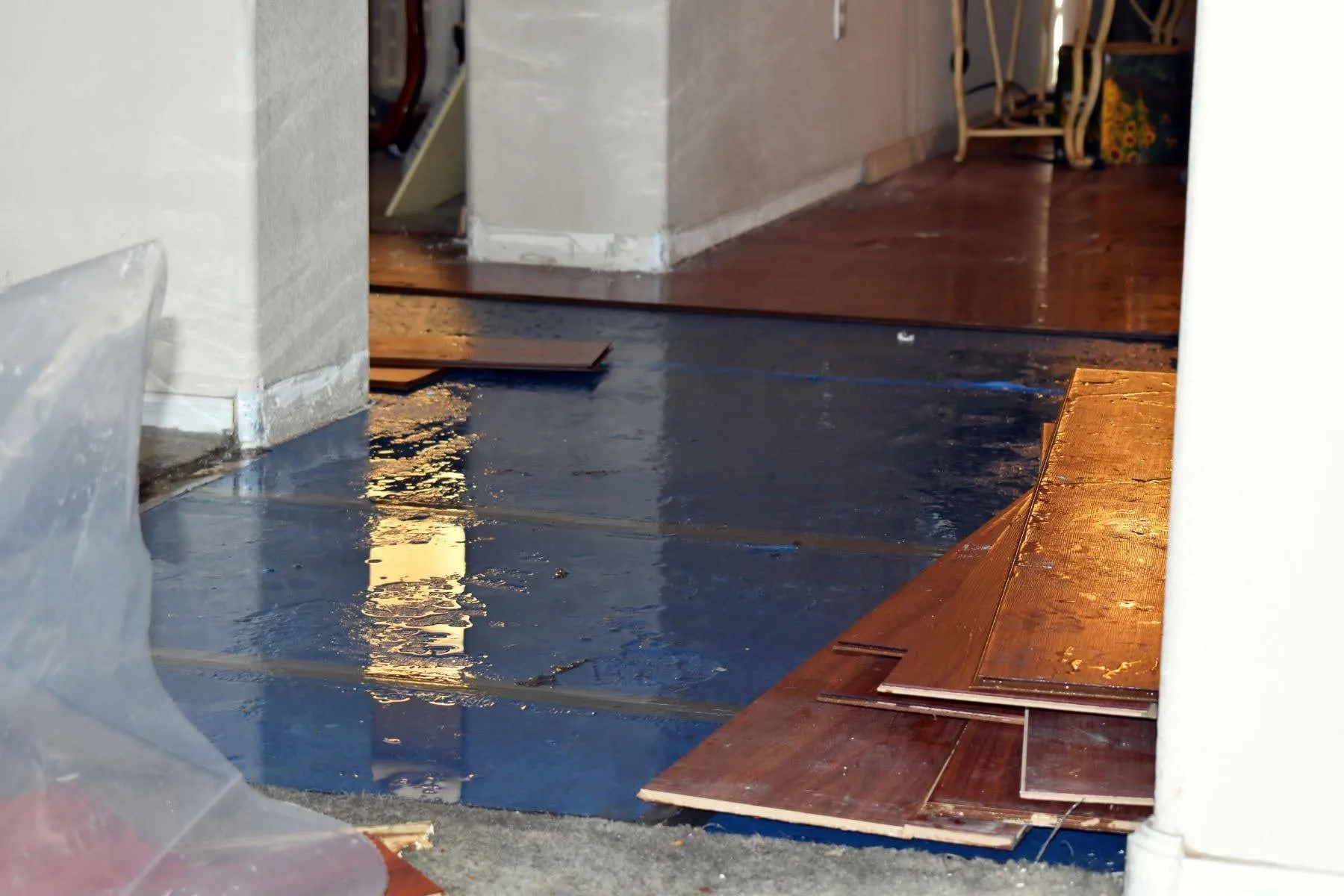
Learn more →Water damage across this territory is defined by two great river systems and by the Mid-Atlantic's position as the receiving end of Atlantic tropical system rainfall. The Rappahannock River -- which flows east through the Virginia Piedmont and reaches the tidal estuary at Fredericksburg -- has flooded the city and the surrounding corridor repeatedly throughout its history and throughout the modern era. Fredericksburg sits directly on the Rappahannock, and the river's behavior during major storm events is a fundamental reality of life in the city. Tropical Storm Lee in September 2011 produced severe Rappahannock flooding that affected properties throughout the Fredericksburg corridor. Previous major events include Hurricane Agnes in 1972, one of the most catastrophic flooding events in Virginia history, which produced record Rappahannock levels that inundated Fredericksburg's lower neighborhoods. The Caroline County communities along the river corridor -- Port Royal, Milford, and the surrounding area -- face the same recurring flood risk with every significant Atlantic weather event that tracks up the river system.
In the Richmond metro, the James River defines the flood risk profile for the city and its surrounding counties. The James River at Richmond has produced major flooding events during Hurricane Gaston in 2004, the remnants of Tropical Storm Camille in 1969 (one of the most catastrophic floods in Virginia history), and multiple other significant events. The river affects properties throughout the Richmond urban core and the Goochland County communities of Manakin Sabot and Crozier along its western reaches. Away from the major rivers, the Mid-Atlantic's nor'easter season -- which runs from fall through spring -- delivers the heavy rainfall and wind events that produce basement flooding, roof damage, and burst pipes in freeze events throughout the full I-95 corridor. Virginia's freeze events, while less frequent than further north, catch properties off guard precisely because winters are mild enough that plumbing is not always protected against the occasional severe cold snap that arrives with an Arctic air mass. Our team responds 24/7 throughout the full corridor.
A fire leaves behind far more than visible damage. Smoke penetrates walls, ductwork, and personal belongings, and soot continues corroding surfaces long after the flames are out. The territory's building inventory spans the full range of Central Virginia residential and commercial construction -- from Richmond's Fan District and Church Hill historic neighborhoods, where older frame construction carries smoke into uninsulated wall cavities and plaster walls absorb soot deeply, through the established mid-century residential stock of Henrico, Chesterfield, and the inner Fredericksburg communities, to the newer suburban construction throughout Woodbridge, Midlothian, and the Prince William County growth corridors where attached construction means smoke events can affect multiple adjacent properties. The colonial and antebellum architecture that defines the historic districts of Fredericksburg -- one of the most intact colonial-era urban streetscapes in America -- and the historically significant neighborhoods of Richmond carry fire and smoke damage restoration requirements specific to their era of construction and historical character.
911 Restoration of Northern Virginia provides full-service fire damage restoration throughout the corridor -- from emergency board-up through complete structural rebuilds -- for all property types from the historic streets of Richmond and Fredericksburg to the rural and suburban residential inventory throughout the territory.
Mold is a persistent and frequently underestimated challenge throughout the I-95 corridor territory, driven by the Mid-Atlantic's humid summers and the flooding legacy that the Rappahannock and James Rivers have left in properties throughout the corridor across multiple events and multiple decades. Virginia's climate delivers summer heat and humidity that creates baseline mold growth conditions in any property with moisture vulnerabilities from late spring through early fall -- and across the territory's diverse housing inventory, from the crawl space homes common throughout the rural Caroline and King George corridors through the basement homes of Richmond's older neighborhoods and the slab construction of newer suburban development, those vulnerabilities take different forms. Properties throughout the Richmond metro and the Fredericksburg area that experienced flooding during any of the significant river events and were not professionally dried to moisture content targets appropriate for Virginia's climate may carry active mold in lower-level wall assemblies and structural framing that grows continuously in the humid summers.
Richmond's older neighborhoods -- the Fan District, Church Hill, Northside, and the established communities of Henrico's West End -- carry significant housing stock from the early and mid-twentieth century where limited vapor barriers, older crawl space construction, and original foundation waterproofing create chronic moisture conditions that sustain mold growth independently of any flood or plumbing event. Our certified remediation specialists use moisture meters, thermal imaging, and air quality testing to find mold in both visible and concealed locations, address the moisture source, and verify complete remediation throughout the full territory.
Raw sewage is a Category 3 biohazard containing bacteria, viruses, and parasites that pose serious health risks to everyone in the affected property. Sewage backup throughout the territory occurs most commonly during the tropical storm and nor'easter rainfall events that push the older combined sewer infrastructure of Richmond, Fredericksburg, and the established communities throughout the corridor past capacity and force sewage backward through basement floor drains and lower-level plumbing fixtures in older connected properties. The same major rainfall events that produce Rappahannock River flooding in Fredericksburg and James River flooding in Richmond also overwhelm the sewer systems serving the city's lower-elevation neighborhoods, creating dual flooding and sewage contamination risk for properties in the affected corridors.
Throughout the rural and semi-rural communities of Caroline, King George, Goochland, Hanover, and the outer reaches of every county in the territory, private septic systems serve the majority of residential properties and face failure risk when sustained rainfall saturates soils and prevents drain field function. Our team responds 24/7 to sewage emergencies throughout the full corridor.
The I-95 corridor territory anchors two of Virginia's most significant commercial and institutional centers at its northern and southern ends, with a substantial military and government institutional presence throughout the intervening corridor. Richmond -- Virginia's state capital and the home of a major concentration of Fortune 500-adjacent corporate headquarters including Dominion Energy, CarMax, Altria, Markel Corporation, and Genworth Financial -- is one of the Southeast's most significant financial services, healthcare, and government administration centers. VCU Health System and Bon Secours Richmond Health System are the healthcare anchors for the Richmond metro, serving as regional medical centers for central Virginia. The Virginia State Capitol complex and the broad apparatus of state government employment generate substantial commercial real estate demand throughout the Richmond core.
At the territory's northern end, Marine Corps Base Quantico -- the largest Marine Corps base on the East Coast, home to Marine Corps officer training, the FBI Academy, and the Drug Enforcement Administration training academy -- anchors Prince William County's federal institutional presence. Naval Support Facility Dahlgren in King George County -- the Navy's premier surface warfare research and development center -- adds a second major military institutional anchor to the corridor. Sentara Mary Washington Hospital serves the Fredericksburg area's rapidly growing population. The Glen Allen and Henrico commercial corridor west of Richmond, where major insurance companies, financial services firms, and technology companies have established major campuses, represents a significant private-sector commercial base throughout the territory's southern reach. 911 Restoration of Northern Virginia provides commercial restoration throughout the full corridor, 24 hours a day.
When damage goes beyond surface-level cleanup, full reconstruction is the path forward. 911 Restoration of Northern Virginia manages the entire process from initial damage assessment through final finishing work for homes and businesses throughout the full corridor. We handle all damage types -- from Rappahannock River flood rebuilds in Fredericksburg and James River flood restoration in Richmond through nor'easter structural repairs, winter freeze pipe event aftermath, fire damage reconstruction in Richmond's historic neighborhoods, and mold damage remediation requiring framing replacement throughout the territory.
The corridor's building diversity demands reconstruction expertise across the full range: Richmond's Fan District and Church Hill historic homes; the colonial-era and antebellum commercial and residential buildings of Fredericksburg's historic district; mid-century residential construction throughout Henrico, Chesterfield, and the established communities; the rural residential and agricultural construction of Caroline, King George, and Goochland Counties; and the rapid new suburban construction throughout Woodbridge, Midlothian, and the growth corridors. We work within Virginia building codes throughout the territory.
911 Restoration of Northern Virginia provides certified biohazard and crime scene cleanup throughout the full corridor -- serving Virginia State Police, Richmond Police Department, Fredericksburg Police Department, Prince William County Police Department, and the Sheriffs of Stafford, Caroline, King George, Hanover, Henrico, Chesterfield, and Goochland Counties, along with all law enforcement agencies, property management companies, and families throughout the territory. Every job is handled with complete discretion, genuine compassion, and strict compliance with Virginia Department of Health regulations governing biohazardous waste handling and disposal.
Professional sanitization services for homes, businesses, and commercial properties throughout the full I-95 corridor territory. VCU Health System, Bon Secours Richmond, Sentara Mary Washington Hospital, and the regional healthcare facilities throughout the territory create consistent institutional demand for hospital-grade disinfection at documented, verifiable standards. Marine Corps Base Quantico and Naval Support Facility Dahlgren require professional disinfection protocols meeting federal facility standards across their installations and contractor-occupied adjacent properties. The Virginia State Capitol complex and the broad state government employment base in Richmond generate institutional sanitization demand throughout the Richmond core. Properties throughout the territory that experienced river flooding, nor'easter water intrusion, or sewage backup require professional disinfection to verify that biohazard contamination has been properly addressed before reoccupancy.
The I-95 corridor territory occupies a storm-exposed position on the Eastern Seaboard, receiving the full force of Mid-Atlantic weather patterns that produce some of the most significant storm events in the eastern United States. Atlantic tropical systems that make landfall on the Carolinas or Mid-Atlantic coast and track northwestward carry their moisture into the Rappahannock and James River watersheds, producing the multi-day flooding events that have defined the territory's major disaster history. Hurricane Agnes in 1972 -- the costliest natural disaster in US history at that time -- produced catastrophic flooding along the Rappahannock at Fredericksburg and along the James River at Richmond simultaneously. The same dual-watershed flooding risk recurs with every significant tropical system that tracks through the region.
The territory's Mid-Atlantic position also places it squarely in the nor'easter belt -- the powerful coastal storms that track up the Eastern Seaboard from fall through spring and deliver the region's heaviest rainfall, snowfall, and coastal wind events. Major nor'easters produce extended rain events that overwhelm drainage infrastructure, basement flooding throughout the established communities, roof damage throughout the territory, and the winter freeze events that accompany Arctic air following the storm systems produce pipe burst emergencies throughout the corridor. Our team responds immediately to all storm and disaster events throughout the full territory, 24 hours a day.
We answer your call any time for properties throughout the territory -- from Woodbridge and Dumfries at the northern end through Fredericksburg, Stafford, King George, Bowling Green, and the Caroline County communities to Richmond, Henrico, Glen Allen, Midlothian, Ashland, Hanover, Manakin Sabot, and all surrounding communities. Nights, weekends, holidays, and during active storm events.
Fast arrival limits water spread and mold risk after Rappahannock River flooding, James River events, nor'easter flooding, and freeze-related pipe bursts throughout the territory. In Virginia's summer humidity, mold risk begins within 24 to 48 hours of water intrusion -- speed matters throughout this corridor.
We understand the specific flooding dynamics of both the Rappahannock River corridor through Fredericksburg and the James River through Richmond -- how these rivers rise during major storm events, the specific water damage patterns they create in the adjacent communities, and the mold risk that follows in Virginia's humid summers.
We understand the documentation, security, and compliance standards required for restoration work at and adjacent to Marine Corps Base Quantico, Naval Support Facility Dahlgren, and the Virginia State Capitol complex.
We work directly with your insurance company and handle documentation and billing on your behalf, simplifying the claims process for homeowners and businesses throughout the full I-95 corridor territory.
One local Virginia team handles everything from emergency cleanup through complete reconstruction throughout the full corridor. No handoffs, no subcontractor delays, no gaps in accountability from the first call through project completion.
Don't wait. Water damage, mold, and storm damage cause more destruction every hour. We hope you never need us, but when you do, we're ready.
Testimonials
4.9 Stars Average Rating*
Blog
Practical guidance to protect your home or business — before disaster strikes and after.