From the historic waterfront of Annapolis and the tidal tributaries of Edgewater, West River, Deale, Galesville, and the Chesapeake Bay shoreline communities of Arnold, Pasadena, and Severna Park through the suburban corridor of Millersville, Severn, Gambrills, Odenton, and Glen Burnie, south into the Prince George's County communities of Fort Washington, Brandywine, and Oxon Hill along the Potomac River, and north into Baltimore City's historic neighborhoods and the Baltimore County waterfront communities of Dundalk and Sparrows Point, our IICRC-certified technicians understand the distinct restoration challenges facing properties across this diverse Chesapeake Bay region.
Whether you're dealing with tidal flooding in an Annapolis property during a nor'easter, sump pump failure in a Glen Burnie or Odenton home after a heavy rainstorm, burst pipes during a Maryland winter freeze, mold in the humid Chesapeake Bay climate, storm surge damage in a Chesapeake Bay waterfront community, or a fire emergency anywhere throughout the territory, we arrive within 45 minutes. We serve homeowners and businesses throughout Anne Arundel, Prince George's, Baltimore, and Calvert Counties and Baltimore City, 24 hours a day, every day of the year.
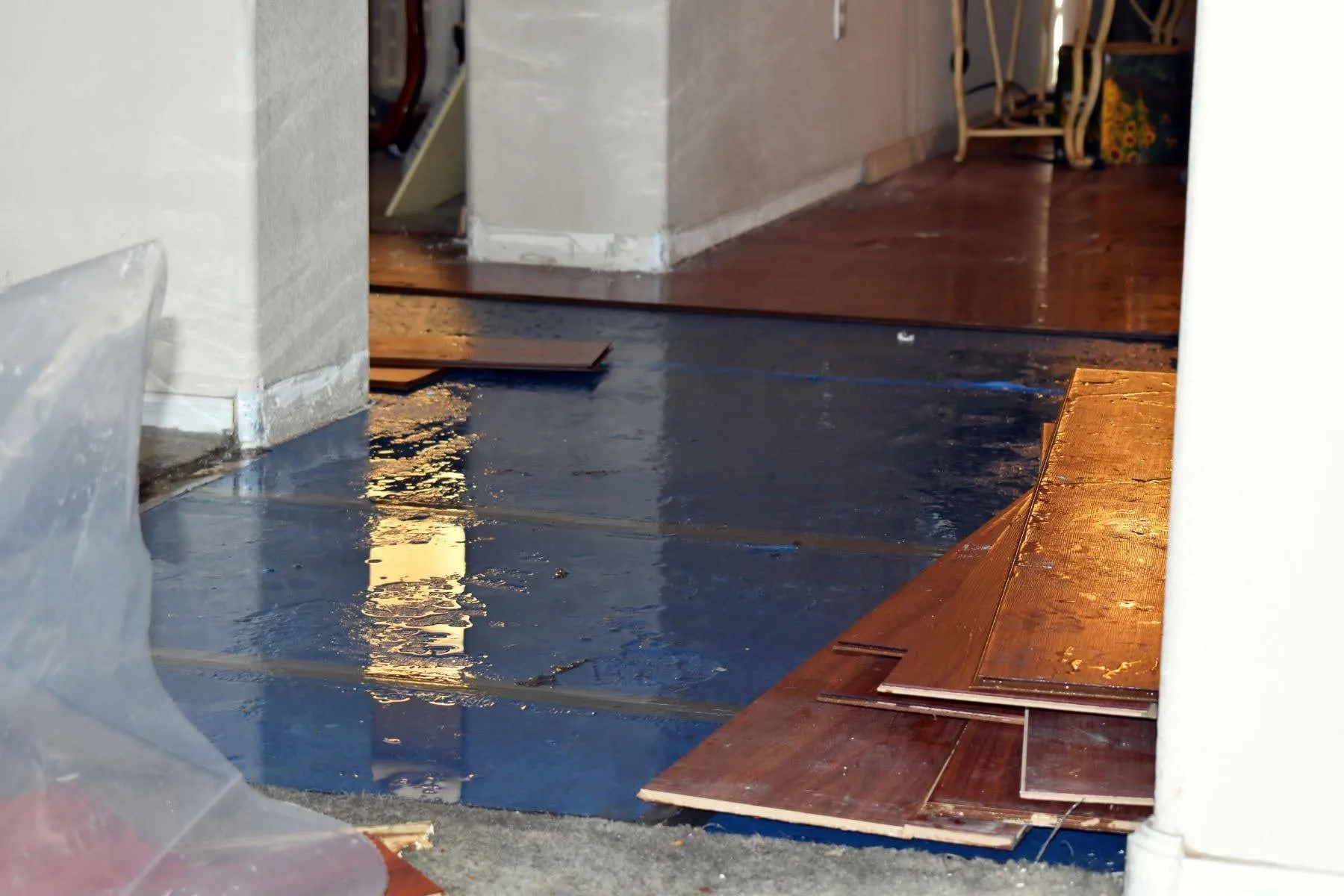
Chesapeake Bay tidal flooding, nor'easter storm surge, Severn and South River overflow, sump pump failures throughout Anne Arundel County's basement-heavy housing stock, burst pipes during Maryland freeze events, and plumbing emergencies throughout the four-county territory. 24/7 response.
Learn more →Complete fire and smoke damage restoration across the region — from residential structure fires in Annapolis, Glen Burnie, and Baltimore City's historic rowhouse neighborhoods to commercial fires throughout the BWI corridor, Fort Meade area, and Prince George's County.
Learn more →The Chesapeake Bay region's humid subtropical climate, persistent marine air, and the territory's significant inventory of older homes with finished basements create year-round mold risk. Certified remediation throughout Anne Arundel, Prince George's, Baltimore, and Calvert Counties.
Learn more →Emergency sewage cleanup throughout the territory — aging combined sewer infrastructure in Baltimore City, Annapolis, and Glen Burnie faces backup risk during heavy rainfall, while rural Anne Arundel and Prince George's County properties face septic system failures. Biohazard-standard 24/7 response.
Learn more →Minimizing downtime for the BWI Thurgood Marshall Airport corridor, Fort Meade and NSA campus-adjacent commercial properties, Annapolis hospitality and government district, Baltimore City's Inner Harbor and commercial districts, and businesses throughout the four-county territory.
Learn more →Full structural rebuilds across the region — from nor'easter and tidal flood reconstruction in Chesapeake Bay waterfront communities to fire and mold restoration in Baltimore City rowhouses and suburban Anne Arundel homes. One local team, no subcontractors.
Learn more →Certified biohazard and crime scene cleanup serving Anne Arundel County Police, Baltimore City Police, Prince George's County Police, and families throughout the territory with full Maryland regulatory compliance.
Learn more →EPA-approved disinfection for Anne Arundel County homes, BWI corridor commercial facilities, Annapolis hospitality and tourism properties, Baltimore City commercial buildings, and healthcare facilities throughout the four-county territory.
Learn more →Immediate response to nor'easters, Chesapeake Bay storm surge, tropical storm remnants, Maryland winter ice storms, and the full range of Mid-Atlantic weather emergencies affecting properties throughout the territory.
Learn more →Water damage across Anne Arundel County and the surrounding territory is shaped by a geographic reality that defines this entire region: the Chesapeake Bay and its tidal tributary system. The Bay and its tributaries — the Severn River running through Annapolis and Arnold, the South River through Edgewater and Davidsonville, the West River through West River and Galesville, the Magothy River through Arnold and Pasadena, the Patuxent River bordering the territory's southern edge — create a tidal flooding environment where properties throughout the waterfront communities of Annapolis, Edgewater, Deale, West River, and dozens of other communities face flooding risk that has no counterpart in inland markets. What makes this flooding profile especially challenging for property owners throughout the territory is that it is not solely storm-driven: the Chesapeake Bay region experiences among the highest rates of relative sea level rise on the East Coast — the combination of actual sea level rise and gradual land subsidence along the Mid-Atlantic coastal plain means that tidal flooding events that were rare a generation ago are now regular occurrences in low-lying Annapolis streets, particularly in the historic district along Compromise Street and the residential waterfront around Back Creek and Spa Creek.
Nor'easters are the dominant large-scale flooding event for the territory. When low-pressure systems track up the Eastern Seaboard from the Gulf Coast and intensify off the Mid-Atlantic coast, they drive powerful onshore winds that push Chesapeake Bay water westward against the tidal tributaries, producing storm surge flooding in every waterfront community from Annapolis south through Edgewater, West River, Deale, and Galesville. The same systems deliver heavy rainfall throughout the inland communities of Glen Burnie, Millersville, Severn, Gambrills, and Odenton, saturating the heavy Maryland clay soils that drain poorly and raising groundwater tables against the finished basement foundations that are nearly universal throughout Anne Arundel County's residential inventory. Sump pump failures during these events are among the most common water damage calls in the county — when power outages accompany nor'easters and sump pumps lose power, finished basements throughout the county flood quickly and completely.
Fire damage across the territory reflects the full range of building types that define this historically and architecturally diverse region. Baltimore City's iconic rowhouse neighborhoods — the dense brick attached-home construction of Fells Point, Canton, Federal Hill, Locust Point, and the surrounding city neighborhoods — present the most challenging fire spread environment in the territory. In rowhouse construction, fire travels rapidly through connected attic spaces, shared party walls, and open stairwells in ways that modern detached construction prevents; a fire that begins in a single rowhouse unit can affect multiple adjacent properties before it is contained. Smoke damage in these properties penetrates deeply into the historic plaster walls, exposed brick, and original wood flooring that define Baltimore's beloved rowhouse character, requiring professional remediation techniques that account for these historic materials.
Annapolis's significant inventory of historic buildings — the 18th and early 19th century structures throughout the historic district, the Colonial Revival and Victorian homes throughout the established neighborhoods, and the waterfront properties throughout the Eastport and West Annapolis communities — carries its own distinct fire restoration challenges where original construction materials, historic finishes, and period architectural details require preservation-conscious restoration expertise. The suburban communities of Glen Burnie, Severn, Millersville, and Odenton carry the mid-century and newer construction that defines the county's large post-war residential expansion, while the Prince George's County communities of Fort Washington, Brandywine, and Clinton carry similar suburban residential profiles. The BWI corridor's commercial concentration and the military and government-adjacent commercial properties throughout the Odenton and Fort Meade area create significant commercial fire damage demand where operational continuity and documentation standards are central to every engagement.
Mold is one of the most persistent and consequential property challenges throughout the Chesapeake Bay region, and the territory's combination of climate, geography, and housing stock makes mold risk here among the most serious in the Mid-Atlantic. Maryland's humid subtropical climate delivers hot, humid summers where outdoor relative humidity regularly exceeds 80 percent from June through September — conditions that create sustained ambient moisture pressure against every building envelope in the territory. The Chesapeake Bay's marine influence keeps ambient humidity elevated in the waterfront communities throughout Anne Arundel County, with the salt air and tidal moisture of Annapolis, Edgewater, Arnold, Pasadena, and Severna Park creating baseline moisture conditions that accelerate mold in building assemblies year-round. Any flooding event in these communities introduces water that is already operating in a high-humidity environment where mold development can begin within 24 to 48 hours.
The territory's housing stock amplifies this risk in two specific ways. Anne Arundel County's large inventory of mid-century and older single-family homes with finished basements — the split-levels, raised ranches, and Colonial styles that define the county's post-war residential fabric throughout Glen Burnie, Severn, Millersville, and the established neighborhoods — carries finished basement spaces where any water infiltration from sump pump failure, foundation seepage, or plumbing event creates immediate mold substrate in the drywall, insulation, and carpet that are standard in these spaces. Baltimore City's rowhouse inventory presents a different but equally significant mold challenge: historic brick construction without modern vapor barriers, original plaster walls that absorb moisture from humid exterior air, and the basement and crawlspace spaces of buildings that have managed moisture in various states of effectiveness for over a century.
Sewage emergencies across the territory follow distinct patterns by community type. In Baltimore City, the combined sewer and storm drainage infrastructure — one of the oldest in the country, with some pipes dating to the late 19th century — regularly surcharges during heavy rainfall events, pushing sewage backward through basement floor drains in the city's dense rowhouse neighborhoods. The City of Annapolis's aging sewer infrastructure in the historic district faces similar capacity challenges during major rainfall events. In the suburban communities of Glen Burnie, Millersville, Severn, and Odenton, newer municipal sewer systems generally perform well, but pump station failures during power outages — a real risk during the nor'easters that also produce the heaviest rainfall — can cause localized backups. In the rural and semi-rural communities throughout southern Anne Arundel County and Prince George's County — Lothian, Harwood, Davidsonville, West River, Deale, Brandywine, and the surrounding unincorporated communities — private septic systems face failure risk when Maryland's heavy spring and fall rainfall events saturate the clay soils and eliminate drain field effectiveness.
The Anne Arundel County and greater Chesapeake Bay territory contains one of the most economically and institutionally significant commercial landscapes in the Mid-Atlantic region. BWI Thurgood Marshall Airport and the surrounding commercial, hotel, and logistics corridor in Linthicum, Hanover, and the BWI corridor represent a major commercial concentration where operational continuity demands the fastest possible professional response. Fort Meade — one of the largest military installations in the United States and home to the National Security Agency — and the surrounding government and defense contractor commercial corridor throughout Odenton, Severn, and the Route 32 corridor create a significant and specialized commercial market. Annapolis, as Maryland's state capital, hosts both the state government complex and a thriving hospitality and tourism economy anchored by the Naval Academy, the historic district, and the City Dock waterfront — a commercial environment where storm and flood events carry immediate revenue and reputational consequences for the dozens of restaurants, hotels, and retailers concentrated in one of Maryland's most visited destinations.
Baltimore City's commercial and institutional landscape is anchored by the Johns Hopkins medical and research system — the Johns Hopkins Hospital campus in East Baltimore, the Johns Hopkins University, and the broader Johns Hopkins Health System — along with the University of Maryland Medical System and the dozens of institutional, academic, and healthcare facilities that make Baltimore one of the most significant medical and research cities in the country. The Inner Harbor, Fells Point, and Canton commercial and hospitality districts serve a major tourism and entertainment market. The Dundalk and Sparrows Point industrial corridor represents Baltimore's significant maritime, manufacturing, and industrial commercial base along the Patapsco River waterfront.
When damage goes beyond cleanup, full reconstruction is the path forward. 911 Restoration of Anne Arundel County manages the entire process from initial damage assessment through final finishing work for homes and businesses throughout the four-county territory. The territory's extraordinary building diversity demands reconstruction professionals experienced across a wide range of construction types and eras — from the 18th and 19th century historic structures of Annapolis's historic district and Baltimore City's Federal Hill and Fells Point to the brick rowhouse fabric of the surrounding city neighborhoods, the mid-century split-levels and Colonials of Anne Arundel County's suburban core, and the waterfront properties of the Chesapeake Bay tidal communities. We work within Maryland building codes, Anne Arundel County and Baltimore City permit requirements, and where applicable, the historic preservation guidelines of Annapolis's historic district and Baltimore's designated historic neighborhoods.
911 Restoration of Anne Arundel County provides certified biohazard and crime scene cleanup throughout Anne Arundel County, Prince George's County, Baltimore City, and Baltimore County — serving the Anne Arundel County Police Department, Baltimore City Police Department, Prince George's County Police Department, Maryland State Police, and all law enforcement agencies, property management companies, and families throughout the territory. Every job is handled with complete confidentiality, genuine compassion, and strict compliance with Maryland Department of the Environment regulations governing biohazardous waste handling and disposal.
Professional sanitization services for homes, businesses, and commercial properties throughout the four-county territory. The Johns Hopkins Hospital, University of Maryland Medical System, and the dozens of healthcare facilities throughout Baltimore City, Anne Arundel County, and Prince George's County create institutional sanitization demand at the highest standard. Annapolis's significant hospitality and short-term rental market — the historic district inns, waterfront hotels, and the rapidly growing Airbnb inventory throughout the waterfront communities — creates consistent demand for documented professional disinfection between guest stays. The BWI corridor's hotel and conference facility concentration adds a major hospitality sanitization market. Properties that experienced tidal flooding, basement flooding, or sewage backup require professional disinfection before they are safe for reoccupancy, and Maryland's humid summer climate accelerates pathogen proliferation after any contamination event.
The Chesapeake Bay region's storm environment is defined by the full range of Mid-Atlantic weather systems that affect Maryland throughout the year. Nor'easters are the dominant large-scale disaster scenario — when these intense low-pressure systems track up the Eastern Seaboard and stall offshore, they drive prolonged onshore winds that push Chesapeake Bay water against every tidal tributary in the territory simultaneously. Major nor'easter events have historically produced some of the Bay region's most significant flooding — the 2003 Isabel, 2011 Irene, and 2012 Sandy events all produced damaging storm surge throughout the Annapolis waterfront, Edgewater, Deale, and the tidal communities of southern Anne Arundel County. These events affect not just the immediate waterfront but the broader community: roads flood, sump pumps fail during power outages, and the territory faces simultaneous demand for restoration services across dozens of communities at once.
Hurricane and tropical storm remnants are the summer and early fall large-scale flooding scenario. When tropical systems make landfall along the Gulf or Southeast Atlantic coasts and track northward, their moisture envelope extends into Maryland and can produce heavy rainfall throughout the territory over 24 to 48 hours — enough to saturate the region's clay soils, overwhelm drainage systems, and produce both urban flooding in the established communities and river flooding in the Severn, South River, and Patuxent watersheds. Maryland's winter ice storm events — when freezing rain coats every surface in the region with ice that brings down trees, power lines, and infrastructure — add a burst pipe and structural damage dimension to the territory's seasonal storm profile. The February 2021 winter storm, the January 2019 polar vortex, and the recurring ice storm events that affect the Mid-Atlantic several times a decade are the primary pipe failure drivers throughout the territory.
We answer your call any time for properties throughout Annapolis, Edgewater, Glen Burnie, Millersville, Severn, Gambrills, Odenton, Arnold, Pasadena, Severna Park, Deale, West River, Lothian, Fort Washington, Brandywine, Oxon Hill, Baltimore City, Dundalk, Sparrows Point, and all surrounding communities. Nights, weekends, holidays, and during active nor'easters and storm events.
Fast arrival after any water event limits mold establishment in the Chesapeake Bay region's humid climate, where flooding events occur in an environment of persistently elevated ambient moisture. We are based in Millersville for rapid response across all four counties and Baltimore City.
We understand the specific restoration challenges of the Chesapeake Bay region — tidal flooding dynamics in the waterfront communities, sump pump failure basement flooding in Anne Arundel County, storm surge remediation in the Bay's tidal tributaries, and the Maryland ice storm pipe failures that affect the territory every winter season.
We understand the specific restoration requirements of Baltimore City's rowhouse inventory and Annapolis's historic architectural stock — the construction materials, building systems, and moisture vulnerabilities of historic properties that require both technical expertise and genuine care to restore properly.
We work directly with all major insurance carriers and handle the full documentation and billing process on your behalf for residential and commercial properties throughout the four-county territory and Baltimore City.
One local team handles everything from emergency cleanup through complete reconstruction throughout Anne Arundel, Prince George's, Baltimore, and Calvert Counties and Baltimore City. No handoffs, no subcontractor delays, no gaps in accountability.
Don't wait — water damage, mold, and storm damage cause more destruction every hour. We hope you never need us, but when you do — we're ready.
Testimonials
4.9 Stars Average Rating*
Blog
Practical guidance to protect your home or business — before disaster strikes and after.