Storm Damage Restoration After Tropical Systems in Georgia
Tropical systems reach Georgia as rain and wind rather than surge, and they tend to sit over the region for a day or two on the way out. That slow pass is what causes the damage.
Several inches of rain on ground that is already saturated runs off instead of soaking in, which puts water into basements, crawl spaces and low spots that normally stay dry.
Here is what metro Atlanta and north Georgia homeowners should know about storm damage after a tropical system, where water usually gets in, and how restoration handles it.
How Tropical Rain Damages Atlanta Homes
Clay soil is a large part of it. Red clay drains slowly, so once it is saturated the water sits against foundation walls and finds any crack, tie rod hole or failed seal it can reach.
Older intown housing stock adds to this. Many homes in Decatur, Kirkwood, Grant Park and the Old Fourth Ward sit on basements or crawl spaces built before modern waterproofing, and a storm that drops several inches in a few hours will test every one of them.
Newer subdivisions farther out are not exempt. Grading that moves water away from one house often moves it toward another, and a lot of suburban basement flooding traces back to where the water goes after it leaves the roof.
Wind Damage and Fallen Trees in Saturated Ground
Georgia's tree canopy is the other half of the problem. Mature oaks and pines hold up well in dry conditions, and far less well once the root zone has been soaking for a day.
A limb through the roof deck is the start of a water loss. Every hour of rain after that opening goes into the attic, down through insulation and into the ceilings below.
Outer bands from a tropical system can also produce brief tornadoes well inland, which is a different kind of damage in a narrow path.
Where Water Gets Into North Georgia Homes
- Roof openings from wind-lifted shingles, failed flashing and falling limbs
- Basement walls, through cracks and cold joints that only leak under sustained pressure
- Crawl spaces, where saturated soil keeps releasing moisture into the floor system for weeks
- Window wells and grade-level doors on the uphill side of a sloped lot
- Floor drains and sewer connections, which can back up when the municipal system is overwhelmed
Creek and river flooding is its own category. 911 Restoration of Northwest Atlanta works areas along the Etowah River, Sweetwater Creek and Pumpkinvine Creek, where the water that causes the damage often arrives after the rain has stopped.
What to Check After the Storm Passes
Work from the top of the house down, and document everything before you start clearing.
Start in the Attic
- Look for daylight, wet sheathing and damp or compressed insulation. Water entering through the roof travels along framing and shows up in rooms nowhere near the opening.
- Inside the house, watch for ceiling stains that are still spreading, bubbling paint on an upstairs wall, and any patch of drywall that has started to sag.
Then the Lowest Level
- Check the base of basement walls for a damp line, the floor for standing water, and the sump pump for whether it survived the outage. A basement that has never flooded usually floods the year the pump loses power.
- In a crawl space, look for standing water, wet insulation hanging down, and a dirt floor that reads wet to the touch.
How Storm Damage Restoration Works
Emergency tarping and board-up
The roof opening is covered first, so the house stops taking water while the rest of the work proceeds.
Water extraction
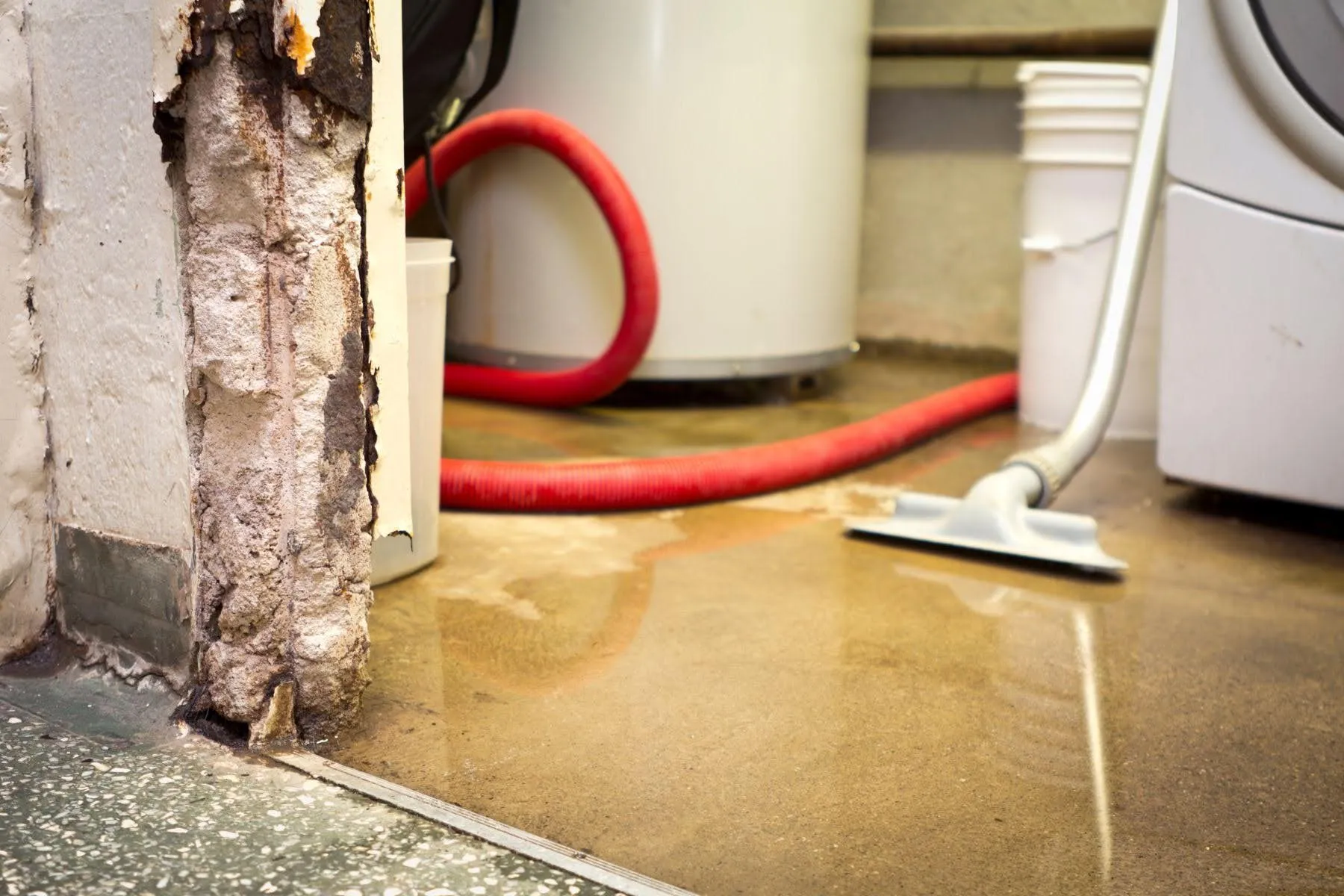
Standing water is pumped and extracted, with the level in a basement or crawl space brought down gradually when the ground outside is still saturated.
Removal of wet materials
Saturated drywall, insulation and flooring come out, cut above the visible water line because water wicks up through the material.
Structural drying
Air movers and dehumidifiers run on the affected areas, with dedicated equipment placed in a crawl space rather than relying on units in the rooms above.
Daily monitoring
Moisture readings on framing and subfloor determine when the equipment comes out, which is when the readings return to the normal dry level for that house.
Reconstruction
Drywall, flooring and finishes are rebuilt once the structure reads dry.
Where a floor drain or sewer connection backed up during the storm, the job also follows sewage cleanup procedures, since that water is handled as contaminated.
Mold Risk in Georgia Humidity
Humidity after a tropical system keeps materials wet longer than an ordinary rainstorm would, and mold can begin inside a wall cavity within a few days of flooding depending on temperature and how long the materials stayed wet.
Crawl spaces are where it usually goes unnoticed, because nobody looks until there is a smell in the house above.
A mold inspection a couple of weeks after the water recedes catches growth while removal is still contained.
Reducing Storm Damage Before the Next System
Manage Roof Water
Clearing gutters and extending downspouts well away from the foundation keeps roof water from pooling against the house, which matters more on clay soil than almost anything else.
Battery-Backup Sump Pump
A battery backup on the sump pump keeps it running through the outage.
Trim Overhanging Limbs
Trimming limbs that overhang the roof lowers the chance of one coming through during wind on saturated ground.
911 Restoration in Georgia: 24/7 Storm and Water Damage Response
911 Restoration covers storm damage across the metro and north Georgia, including Atlanta through Buckhead, Midtown, Sandy Springs, Decatur and Brookhaven, Marietta and Cobb County through Kennesaw, Smyrna, Acworth and Powder Springs, Northwest Atlanta through Canton, Cartersville, Douglasville and Dallas, and Northeast Georgia through Athens, Winder, Braselton, Buford and Lawrenceville.
Crews are available 24 hours a day, with a typical arrival goal of 45 minutes. After a widespread storm, arrival depends on road conditions and how many emergencies are open at once.
Board-up, water removal, structural drying, sanitizing and reconstruction are handled by the same team, so there is one point of contact from the first call through to a finished home.
Need Storm Damage Help Now?
Contact 911 Restoration for 24/7 emergency service.